Types of Glass for Sports Courts
SECURCID, LAMICID and extra-clear glass. Learn about the differences and choose the most suitable glass for your project.
What Glass Does Your Court Need?
Choosing the type of glass is essential for the safety and performance of your facility. Each type has specific characteristics that make it more suitable for certain uses.
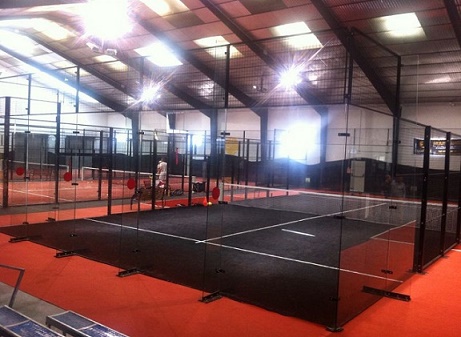
SECURCID Toughened Glass
The toughening process heats the glass to over 600°C and cools it rapidly, creating internal stresses that multiply its strength.
SECURCID toughened glass offers a bending strength of 120 N/mm² compared with 45 N/mm² for standard glass. On extreme impact, it fragments into small rounded pieces without sharp edges, minimising the risk of serious injury.
LAMICID Laminated Glass
Laminated glass consists of two or more layers of glass bonded by one or more PVB (polyvinyl butyral) interlayers.
On breakage, the fragments remain bonded to the PVB interlayer, maintaining the integrity of the panel even after the impact. This offers a second layer of safety that is especially valued in installations with spectators or children.
Extra-Clear Glass
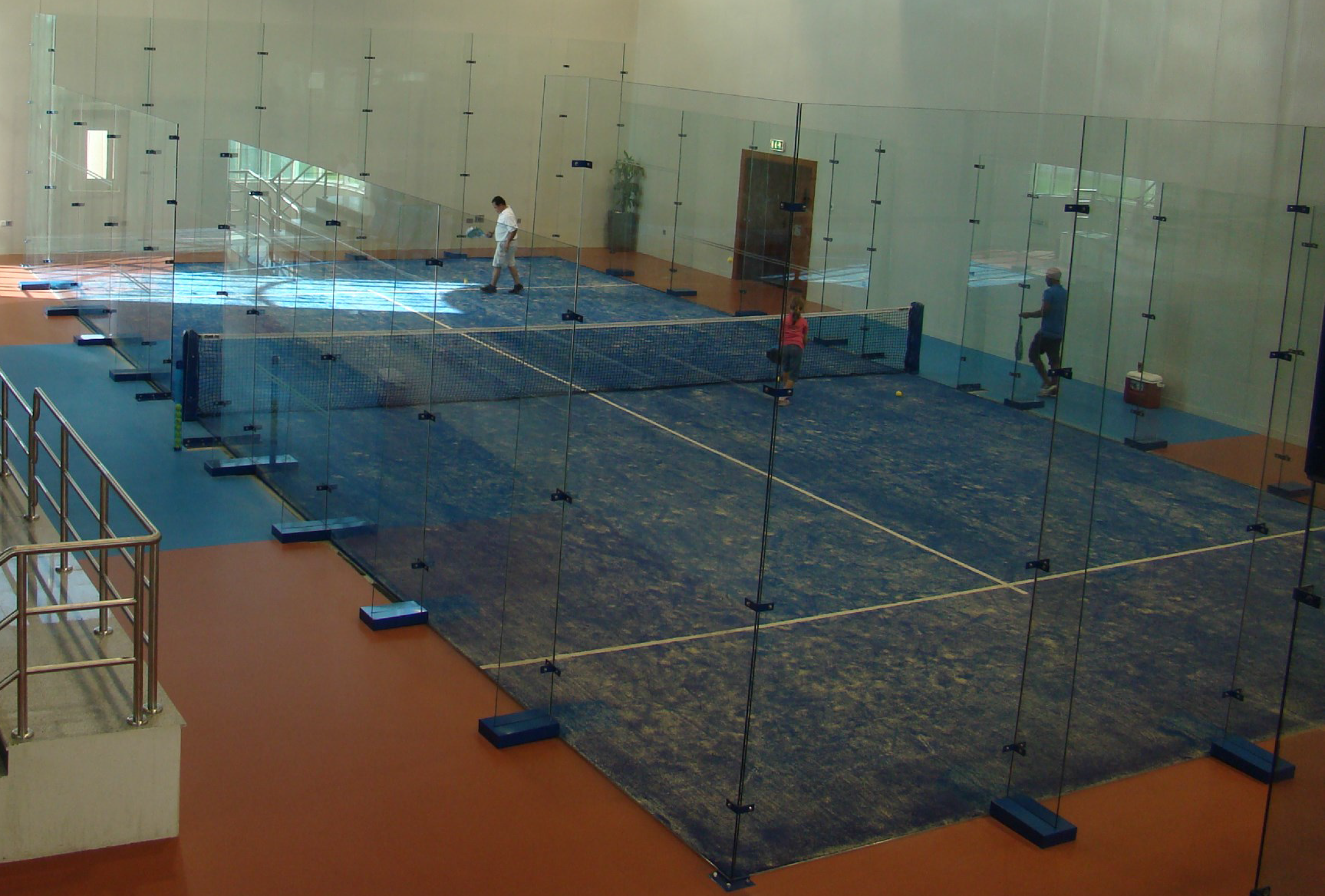
Extra-clear glass has a much lower iron oxide content than standard glass, which gives it exceptional transparency.
Whereas standard glass transmits 83% of visible light, extra-clear glass reaches 91%. This eliminates the greenish tint characteristic of ordinary glass and produces a neutral, crystal-clear appearance that markedly improves the visibility of the game and the look of the installation.
Heat Soak Test — Guaranteed Safety
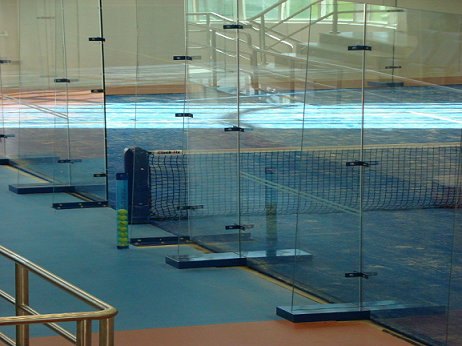
A verification process that is essential for the safety of toughened glass.
Toughened glass can contain tiny nickel sulphide (NiS) inclusions that are visually undetectable but can cause spontaneous breakage weeks or months after installation.
The Heat Soak Test (HST) subjects the already toughened glass to a controlled thermal cycle at 290°C for several hours. This test causes defective panels to break in a controlled manner at the factory, before they are sent to site.
All the SECURCID glass we make must pass the HST in accordance with standard EN 14179-1. The result: practically zero risk of spontaneous breakage once installed.
- Standard EN 14179-1 for HST of toughened glass
- Process temperature: 290°C ± 10°C
- Reduces the risk of spontaneous breakage to <1:400 panels
- Required by the FEP for competition courts
Applicable Standards
What glass does your project need?
Our engineers calculate the optimum thickness according to the location and the type of court. No obligation.